


How to Incubate Chicken and Coturnix Quail Eggs
Practical temperature, humidity, turning, lockdown, and troubleshooting guidance built from hands-on hatching experience.
Chicken vs. Coturnix Quail Incubation
The basic incubation process is similar, but the timing is different. Use this quick comparison before setting your eggs.
Chicken Eggs
Coturnix Quail Eggs
Humidity note: Do not rely on one universal number. Incubator design, room humidity, eggshell characteristics, and air-cell development all affect moisture loss. Use these factors and your incubator manufacturer’s instructions to guide adjustments.
FREE INCUBATION QUICK GUIDES
Take the Guesswork Out of Your Next Hatch
Choose the bird you are hatching, then sign up to receive the matching quick guide in your inbox.
Free download, plus practical poultry and incubation emails from Bryant's Roost. Unsubscribe anytime.
Need exact dates for your hatch? Use the free egg incubation calculator to calculate your stop-turning, lockdown, and expected hatch dates.

Recommended Products
Quick Look
Accurate temperature and humidity monitoring
Refreshes every 10 seconds
Built-in stand and magnetic back
AAA battery included
FREE Shipping
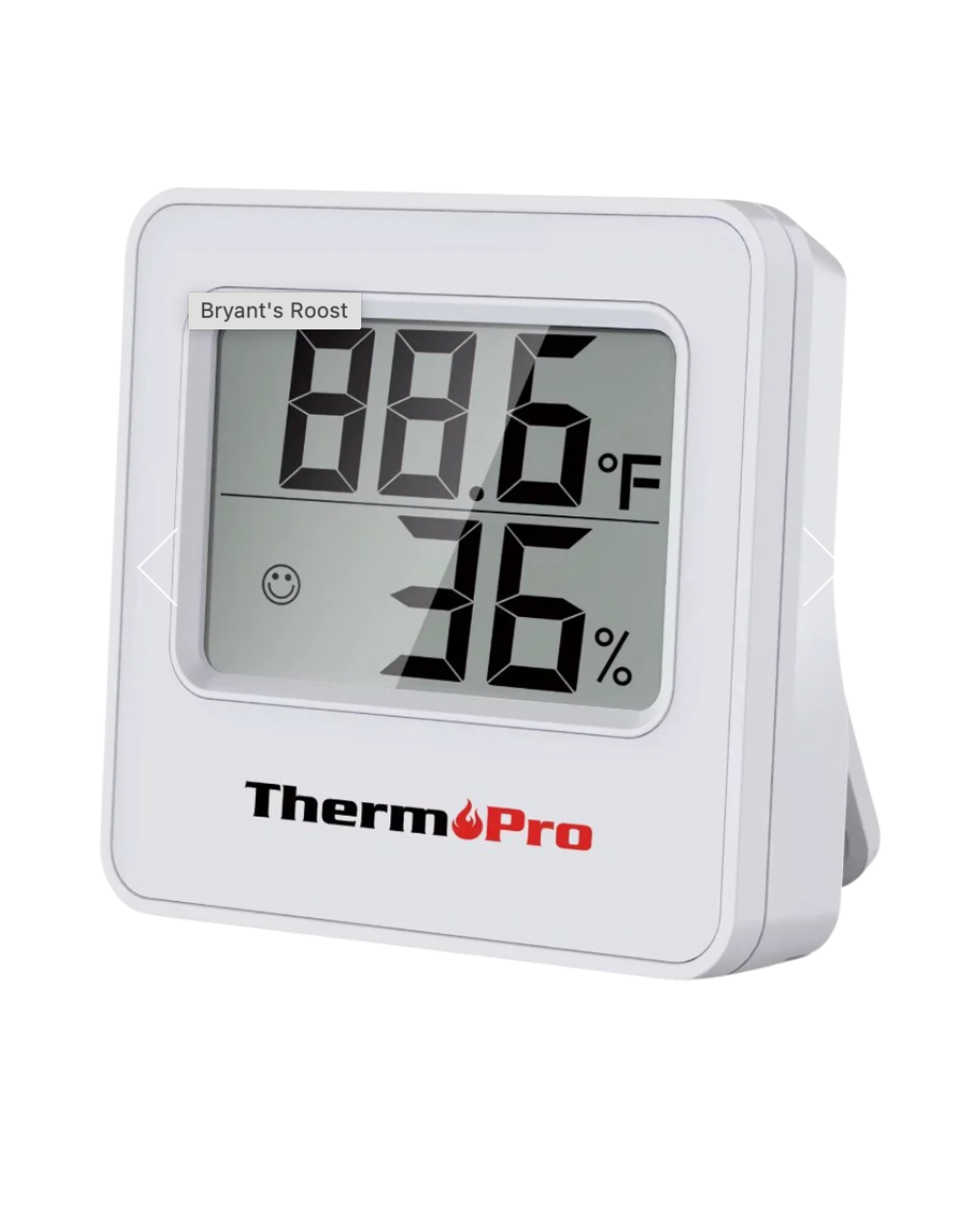
ThermoPro Incubator Thermometer & Hygrometer
Accurate temperature and humidity readings are essential for a successful hatch, and the ThermoPro Thermometer & Hygrometer is one of my favorite tools for monitoring an incubator.
Its compact size fits easily inside most incubators while providing readings with ±1°F temperature accuracy and ±3% relative humidity accuracy. The display refreshes every 10 seconds, allowing you to monitor changing conditions throughout incubation without constantly opening the incubator.
The built-in stand makes it easy to position inside your incubator, and when you're finished hatching, the magnetic back lets you store it conveniently on a refrigerator, cabinet, or other metal surface until your next hatch.
The thermometer operates on a single AAA battery, which is included, so it's ready to use right out of the package.
This is the same thermometer included in our Quail Starter Pack because it's simple, reliable, and easy for beginners and experienced hatchers alike.
What's Included
ThermoPro digital thermometer & hygrometer
AAA battery included
Built-in stand
Magnetic back
FREE Shipping
Who It's For
Perfect for chicken, quail, duck, turkey, and other poultry keepers who need an easy, accurate way to monitor incubator temperature and humidity.
Why Bryant's Roost?
I've tested a lot of incubation equipment over the years. This ThermoPro unit has earned a place in my starter kits because it's dependable, easy to read, and provides the information every hatcher needs without unnecessary complexity.

Battery Backup and Surge Protector
A short power outage can jeopardize an entire hatch. This UPS battery backup can temporarily power essential incubator controls and help protect sensitive equipment from voltage surges.
- 600VA and 360W capacity
- Eight electrical outlets
- Battery backup and surge protection
- Compact design for the hatch room
Important: This is intended to bridge a short outage and buy time to start a generator or make other arrangements. Runtime depends on the wattage of the equipment connected to it.
Check Current Price on AmazonAffiliate link. I may earn a commission at no additional cost to you.
-
No matter what species you are incubating, set the incubator at 99.5F or 37.8C.
-
Humidity is typically 40-50% however, consistency is most important. Aim for 40-50% but if you achieve 38 consistently, leave it at that.
-
When you first put them in, that is day 0, because they have been in there zero days.
Lockdown day is roughly 3 days before hatch, but if you have a schedule conflict, make it sooner rather than later.
-
Quail are 17-18 days
bobwhites are 22 days
chickens are 21 days
turkeys and ducks 28 days
-
When they are all dry and fluffy or the oldest is 48 hours. The chirping will call the others out.